
Table of Contents
ERP for manufacturing Tamil Nadu is no longer a luxury reserved for large corporations. As Tamil Nadu cements its position as India’s premier industrial hub contributing over 9% to national manufacturing GDP small and mid-sized factories are discovering that integrated ERP software is the single fastest lever to cut waste, improve delivery times, and stay GST-compliant in 2026.
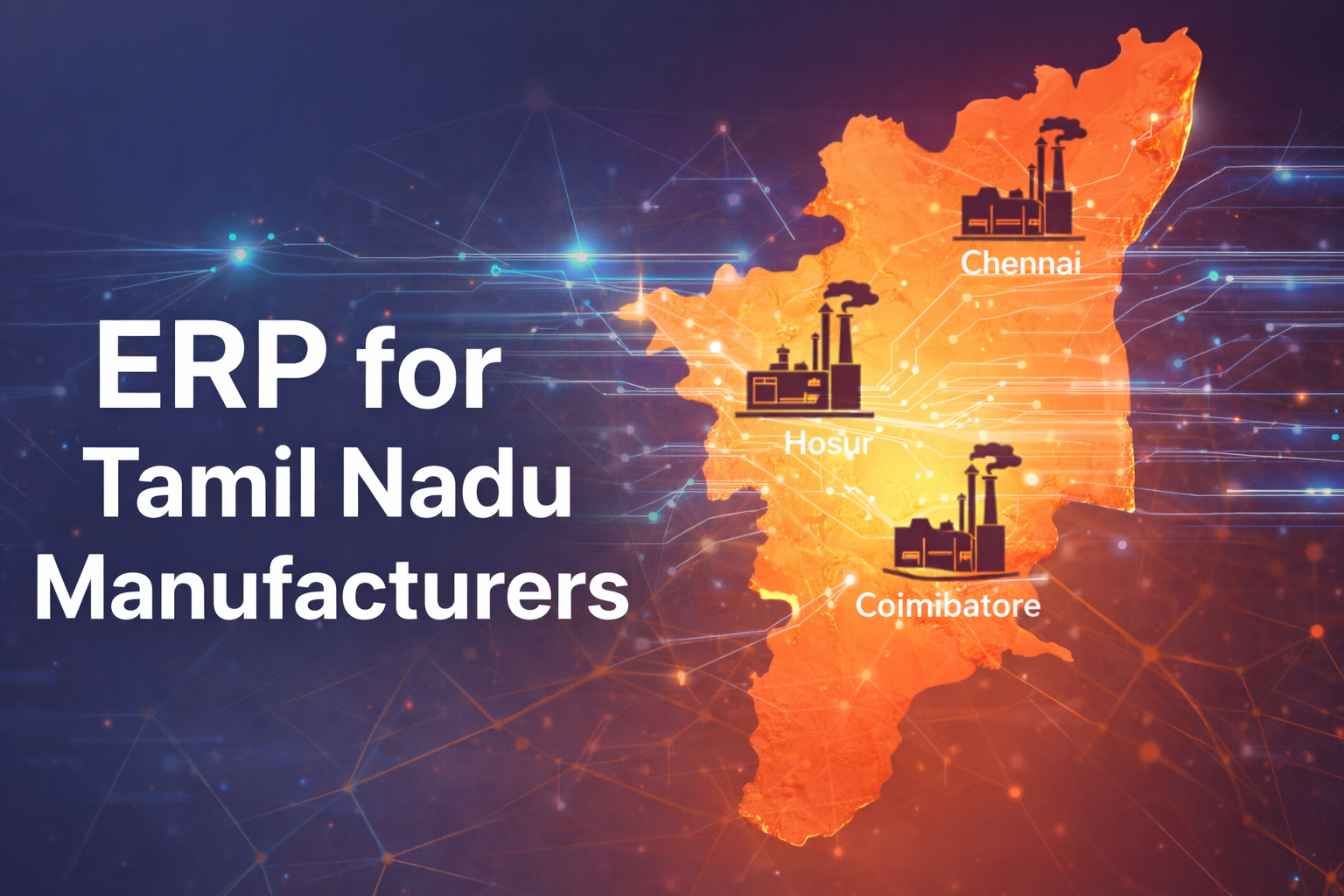
The state’s manufacturing ecosystem spans an extraordinary range garment exports from Tirupur, automotive ancillaries from Hosur, engineering goods from Coimbatore, and petrochemicals along the Chennai–Manali corridor. Yet despite this industrial strength, most factory owners still rely on spreadsheets, standalone Tally software, and paper-based processes to run day-to-day operations.
The result? Inventory errors, production delays, cash flow mismanagement, and an inability to scale. In a post-pandemic global supply chain that demands speed and transparency, this operational gap is becoming increasingly costly.
What Is ERP – and What Does It Actually Do?
Enterprise Resource Planning (ERP) is a unified software platform that connects every department of your manufacturing business: production planning, raw material procurement, inventory management, quality control, sales orders, dispatch, finance, HR, and statutory compliance all in one system, updated in real time.
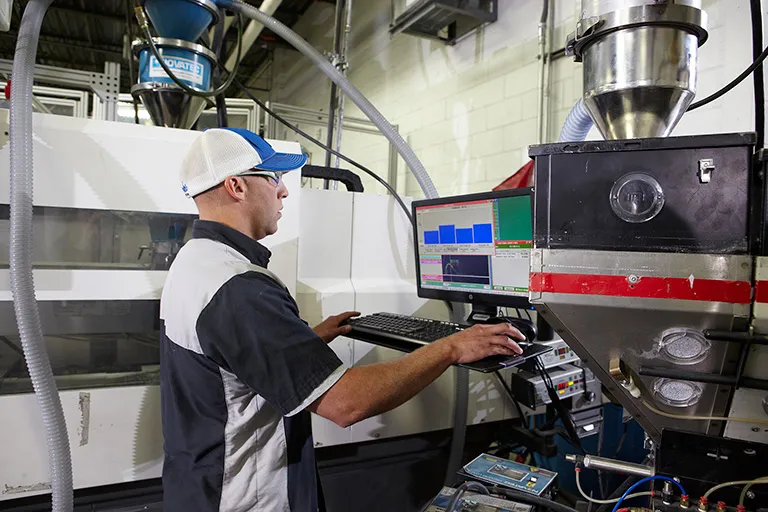
Think of ERP as the nervous system of your factory. When a sales order is placed, the ERP system automatically checks raw material availability, triggers a purchase order if stock is low, schedules production, updates accounts receivable, and generates a GST-compliant invoice – without any manual re-entry of data.
| 💡 Did You Know? A Confederation of Indian Industry (CII) study found that Tamil Nadu manufacturers lose up to 18% of annual revenue due to poor inventory management, production downtime, and billing errors problems a well-implemented ERP system directly addresses. |
7 Proven Benefits of ERP for Manufacturing Tamil Nadu
1. Real-Time Inventory Visibility
Tamil Nadu factories especially in textiles and auto-components often deal with hundreds of SKUs across multiple warehouses. ERP provides a live view of stock levels, reducing overstock by up to 30% and preventing costly production stoppages caused by material shortages.
2. GST & Statutory Compliance, Automated
Modern ERP systems auto-generate GSTR-1, GSTR-3B returns, e-way bills, and e-invoices keeping you audit-ready at all times without needing a dedicated compliance team. This alone saves Tamil Nadu manufacturers an average of 12–15 hours of manual effort per month.
3. Production Planning & MRP
Material Requirements Planning (MRP) modules calculate exactly what raw materials you need, when you need them, and in what quantity synced to confirmed sales orders. This eliminates guesswork and reduces lead times by 20–35%.
4. Multi-Location Management
Many Tamil Nadu manufacturers have plants in Hosur, warehouses in Chennai, and sales offices in Coimbatore. ERP consolidates all locations into one unified dashboard, giving management complete visibility regardless of geography.
5. Accurate Job Costing & Profitability
Batch costing, job costing, and process costing modules reveal exactly how much each product costs to produce enabling smarter pricing decisions and surfacing hidden losses that spreadsheets cannot detect.
6. Faster Order-to-Cash Cycle
From customer inquiry to invoice and payment reconciliation, ERP automates the entire sales workflow. Tamil Nadu exporters in particular benefit from faster documentation and a reduced DSO (Days Sales Outstanding).
7. Scalability – Grow Without Growing Pains
When your factory grows from 50 to 500 employees, ERP scales with you – add new modules, users, or plant locations without rebuilding your operational infrastructure from scratch.
Key Tamil Nadu Industries That Need ERP Right Now
While every manufacturer benefits from ERP, certain industries in Tamil Nadu have the most urgent need due to high volumes, multi-location operations, and strict compliance requirements:
| Industry | Primary ERP Need | Key TN Hub | Typical Impact |
| Textile & Garments | Batch tracking, export compliance | Tirupur, Coimbatore | ↓ 25% material wastage |
| Auto-Ancillaries | JIT delivery, quality control | Hosur, Chennai | ↑ 30% on-time delivery |
| Engineering Goods | Job costing, BOM management | Coimbatore | ↓ 18% cost overruns |
| Food Processing | Expiry tracking, FSSAI compliance | Salem, Erode | Zero compliance lapses |
| Chemicals & Pharma | Batch traceability, safety docs | Chennai, Cuddalore | ↑ Audit readiness |
| Electronics Mfg. | Component tracking, BOM control | Sriperumbudur | ↓ 40% component errors |
Cloud ERP vs. On-Premise ERP: What Should Tamil Nadu Factories Choose?
| Factor | Cloud ERP | On-Premise ERP |
| Upfront Cost | Low – subscription-based | High – license + hardware |
| Implementation Time | 4 – 10 weeks | 3 – 9 months |
| Data Control | Vendor-managed servers | Full in-house control |
| Scalability | Instant and flexible | Limited by hardware |
| Internet Dependency | Required at all times | Works fully offline |
| Best For | SMEs, growing factories | Large plants, sensitive data |
For most small and mid-sized Tamil Nadu manufacturers, cloud ERP is the recommended starting point. It requires no large capital expenditure, deploys rapidly, and scales as your business grows. Several vendors now offer Tamil-language interfaces and local support teams – a significant advantage for shop floor adoption.
How to Successfully Implement ERP in Your Tamil Nadu Factory
ERP implementation is a business transformation project, not just a software installation. Follow these five steps for a successful rollout:
Step 1: Audit Your Current Processes
Before selecting any ERP, map your existing workflows from production floor to dispatch. Identify your top 5 operational pain points. This becomes your requirements checklist when evaluating vendors.
Step 2: Choose Industry-Specific ERP
Generic accounting software won’t support manufacturing-specific features like Bill of Materials (BOM), Work Orders, or batch traceability. Choose a solution built for or deeply customizable to your specific industry vertical.
Step 3: Prioritize GST & Compliance Modules
India’s complex indirect tax structure makes compliance a non-negotiable ERP requirement. Ensure your vendor has a proven GST compliance track record, including real-time integration with the GSTN portal for e-invoicing and e-way bills.
Step 4: Invest in Change Management
The biggest reason ERP implementations fail is people, not technology. Budget proper time and cost for training store managers, accountants, and shop floor supervisors. Prefer vendors offering Tamil-language training resources and on-site support.
Step 5: Start With a Pilot Module
Avoid a ‘big bang’ simultaneous rollout. Launch ERP in one area first typically inventory or finance stabilize it, then expand to production planning and HR. This phased approach dramatically improves user adoption rates and reduces project risk.
Frequently Asked Questions
What is ERP software for manufacturing in Tamil Nadu?
A: ERP (Enterprise Resource Planning) for manufacturing in Tamil Nadu is an integrated software platform that connects production, inventory, finance, HR, and supply chain operations into one centralized system helping manufacturers streamline operations and stay GST-compliant. It replaces siloed spreadsheets and standalone tools with a single source of truth for your entire factory.
Which industries in Tamil Nadu benefit most from ERP?
Industries such as automobile ancillaries (Hosur), textile manufacturing (Tirupur), garments (Coimbatore), chemicals (Chennai/Cuddalore), electronics (Sriperumbudur), and food processing (Salem, Erode) benefit most from ERP due to their high-volume, multi-location, and compliance-heavy operations.
How long does ERP implementation take for a Tamil Nadu factory?
A typical ERP implementation for a mid-sized manufacturing company in Tamil Nadu takes 3 to 6 months, depending on operational complexity, number of users, and customization required. Cloud-based ERP can go live in as little as 6–10 weeks using a phased rollout approach.
Is ERP affordable for small manufacturers in Tamil Nadu?
Yes. Cloud-based ERP now makes the technology accessible to small and medium manufacturers in Tamil Nadu, with subscription pricing typically starting from ₹8,000 – ₹25,000 per month eliminating large upfront costs. Many vendors offer Tamil-language support and localized training as well.
Does ERP help with GST compliance in Tamil Nadu?
Absolutely. Modern ERP systems include built-in GST compliance modules that auto-calculate tax, generate e-way bills, file GSTR-1 and GSTR-3B returns, and maintain audit-ready records significantly reducing the risk of penalties and saving hours of manual effort every month.